A good kids bedroom in a Bangalore apartment is planned for the child your son or daughter is about to become, not just who they are today. Keep the built-ins (wardrobe, study unit, bed storage) neutral and well made, and let the colour, bedding and decor carry the theme, so the room can change with them without new carpentry. Add a study corner with proper light, storage they can reach, rounded edges and anchored tall units, and you have a room that works from the first school bag to board exams.
Plan the Room to Grow With Your Child
The most common regret we hear is a room built around one favourite cartoon or colour that the child has outgrown within a couple of years, while the carpentry is still in perfect shape. Woodwork is the part of a kids room that costs the most and lasts the longest, so it is worth designing for the long run.
- Keep the built-ins timeless. Wardrobes, the study unit and the bed are best in calm, solid finishes. Bring in the fun through paint, wallpaper on one wall, bedding, rugs and lights, which are easy to change later.
- Think in stages. A toddler needs open floor to play on and low, safe storage. A school-going child needs a desk, a bookshelf and a place for the school bag. A teenager wants privacy, more hanging space and a room that does not look like a kids room.
- Leave room to adapt. Adjustable shelves, a desk that can take a second chair and a wardrobe with movable internals let the same carpentry serve every stage.
Choosing the Bed: Single, Twin or Bunk
In most Bangalore 2BHK and 3BHK apartments the kids room is the smallest bedroom, so the bed decides how much floor is left for everything else.
- One child: a single or three-quarter bed pushed against a wall frees up the centre of the room for play now and a study chair later. A bed with drawers or a hydraulic lift-up base gives you storage for spare bedding and out-of-season clothes.
- Two children sharing: twin beds work when the room is wide enough to keep a clear path between them. Give each child their own side, their own lamp and their own shelf, which avoids a lot of arguments.
- Bunk or loft beds: they save floor space, but need a sturdy ladder or stairs (stairs with storage are safer for younger children), a full-height guard rail on the top bunk, and enough distance from the ceiling fan. They suit older children best.
- Upholstered headboards are softer to lean on for reading and help prevent knocks, as in the Jayanagar room further down this page.
For more on how bed placement, light and materials affect sleep, see our guide on designing a bedroom that helps you sleep better. Most of it applies to children too.
A Study Corner That Actually Gets Used
Homework at the dining table is common, but a dedicated study corner in the child's own room builds the habit and keeps books off the rest of the house.
- Place the desk near the window for daylight, but not facing straight into it, which causes glare on screens.
- Light the desk itself. A strip light under the overhead cabinet or a good desk lamp matters more than a bright ceiling light.
- Plan the wall above the desk. Overhead cabinets or open shelves keep books, art supplies and trophies within reach and off the desk top. A pin board or magnetic panel gives them a place for timetables and drawings without marking the paint.
- Think about cables early. Ask for sockets above desk height and a cable hole in the top for a laptop, charger and lamp, so wires are not trailing across the floor.
- Choose a desk with some depth and an adjustable chair, so the same desk still works as your child grows taller.
Storage Kids Can Reach (and Keep Tidy)
Children only put things away if putting things away is easy. Design the storage around their height and their habits.
- Low, open storage for daily things: toys, shoes and the school bag go in open shelves or baskets at their height. Doors and handles they cannot manage mean things end up on the floor.
- A wardrobe that changes with them: start with a lower hanging rail and more shelves, and raise the rail as they grow. Sliding shutters save space in narrow rooms; our wardrobe design page explains the options.
- Lofts for what you rarely use: spare bedding, suitcases and outgrown toys you are keeping go above the wardrobe, out of the way.
- A display spot: a small lit niche or shelf for medals, trophies and craft projects makes children proud of their room, and keeps those things off the study table.
Short on space overall? Our small 2BHK interior ideas show how to fit more storage into compact Bangalore flats.
Safety Details Worth Insisting On
These are small things at the design stage and hard to add later, so put them on your list for the first meeting.
- Rounded edges and corners on desks, bedside tables and the bed frame, especially at a small child's head height.
- Tall units anchored to the wall. Wardrobes, bookshelves and lofts should be fixed so they cannot tip when a child climbs or pulls on a door.
- Soft-close hinges and drawer channels to protect little fingers from slamming shutters.
- No glass at low level. Keep mirrors and glass shutters high up or use safety glass, and avoid glass-topped furniture in a young child's room.
- Safe window treatments. Choose blinds without loose cords, or with the cords tied up out of reach, and grilles or locks on windows that open.
- Sockets and switches placed thoughtfully, with shutter-type sockets at low level.
- The right board. Bangalore's humidity is hard on low-grade boards, so ask which board is used for each unit. Our plywood vs MDF vs HDHMR guide explains the differences.
Lighting, Colour and Walls
- Layer the light. A general ceiling light, a focused light at the desk, a reading light by the bed and a soft night light. Warm light in the evening helps children wind down before sleep.
- Pick calm base colours. Soft blues, greens, warm whites and muted pastels work for years. Add brighter colour on one feature wall, in the bedding or in a rug, where it can be changed easily.
- Use washable paint. Crayons and fingerprints are part of the deal. A washable, low-odour emulsion makes cleaning easy and keeps the room fresh to sleep in soon after painting.
- Make one wall theirs. A chalkboard section, a pin-up wall or a simple wallpaper lets the room feel like it belongs to your child without changing any carpentry.
Inside a Kids Room We Built in Jayanagar
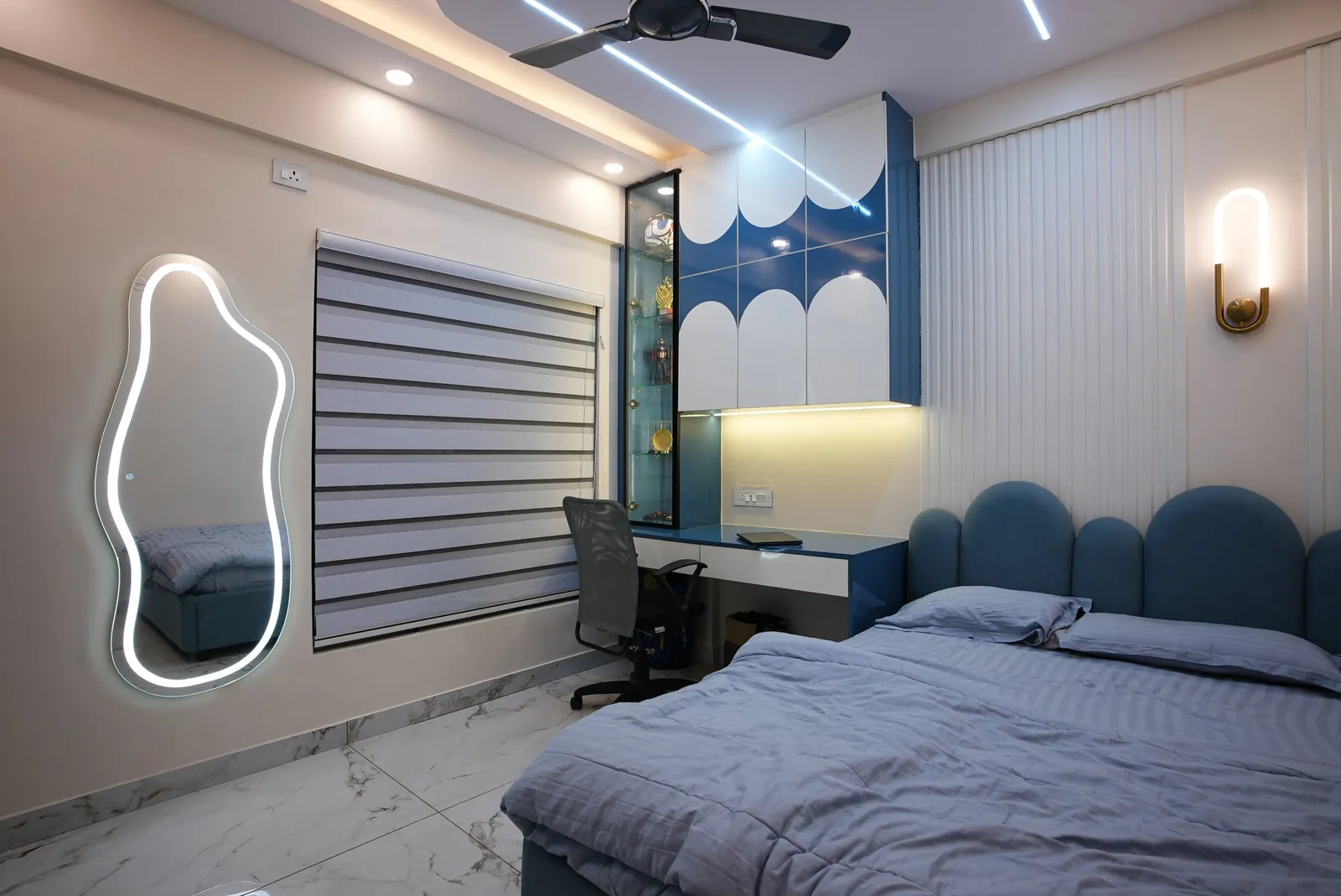
This room is from Amjad Khan's 3BHK in Jayanagar, a full-home Skyline Luxury project we delivered in about three months, design to handover. It shows most of the ideas above working together in a regular apartment bedroom:
- A soft, rounded headboard in blue upholstery that is comfortable to lean on and has no sharp edges.
- A study desk with an overhead cabinet, its arch-shaped shutters giving the room its playful look while the carpentry itself stays solid white and blue.
- Strip lighting under the cabinet, so the desk is well lit for homework without relying on the ceiling light.
- A lit display niche beside the desk for trophies and keepsakes, placed above a young child's reach.
- A backlit mirror and wall light, plus blinds on the window and the wall, for soft, layered light in the evening.
See more of this home on our JP Nagar, Jayanagar and BTM page and our projects by community page, or browse finished bedrooms on our bedroom interior design page.
Quick Answers
How do I design a kids bedroom that will still work as my child grows?
Keep the built-in furniture (wardrobe, study unit and bed) in neutral, durable finishes and put the theme into paint, bedding, rugs and lights, which are easy to change. Choose adjustable shelves, a deep desk and a wardrobe whose rail can be raised later.
Is a bunk bed a good idea for a small kids room?
A bunk bed saves floor space when two children share, but it suits older children best. Make sure the top bunk has a full guard rail, the ladder or stairs are sturdy, and there is enough clearance from the ceiling fan.
What safety features should a kids bedroom have?
Rounded edges, tall units anchored to the wall, soft-close hinges and channels, no glass at low level, cord-free blinds and window grilles, and shutter-type sockets. These are easy to plan at the design stage and much harder to add later.
Where should the study table go in a kids room?
Near a window for daylight, but not facing directly into it, with a dedicated light over the desk and sockets above desk height for a lamp and laptop.
Which colours work best for a kids bedroom?
Calm base colours such as soft blues, greens, warm whites and muted pastels, with brighter colour on one feature wall or in the bedding. Use a washable paint so marks can be wiped off.
Design a room your child will love for years.
Book a free consultation with Skyline Spaces. We'll plan the bed, study corner and storage around your child and your home, with a clear, itemised estimate, no obligation and no pressure. Every home we deliver carries a 10-year warranty.
Book a Free Consultation